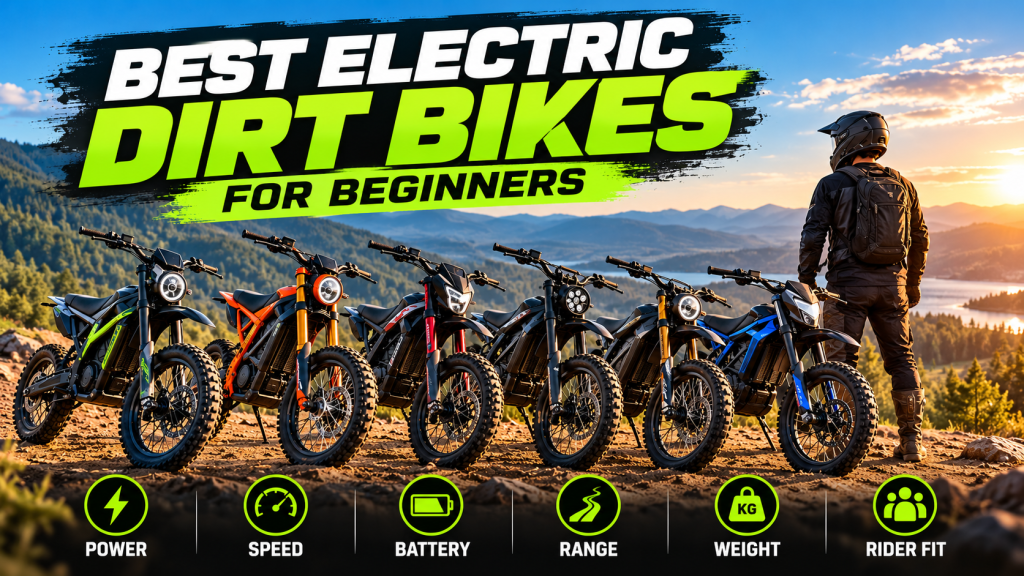
Trail riding changes what matters in an electric dirt bike. A bike can have an impressive top-speed number and still be a poor choice for tight trails, hills, rocks or long rides. For trails, suspension, tires, battery capacity, controllable power, brakes, weight and rider fit all matter.
We compared eight electric dirt bikes available on Amazon using those factors instead of simply picking the biggest motors. We have not personally tested these bikes. Every figure below comes from manufacturer or listing data, and owner feedback is labeled as individual reports.
- Balanced full-size trail bike: Yozma IN10 Pro
- Power plus a large battery at a lower weight: COSWHEEL R6000
- Hills and torque: Tasaca T500 Pro (365 N·m claimed)
- Larger riders and open trails: EKX TX1 (330 lb max load, 5’2”–6’5” rider height)
- Experienced riders who want maximum performance: EKX X21 Max
- Biggest battery (and heaviest bike): Kovo RT-X
Best Electric Dirt Bikes for Trails at a Glance
| Electric Dirt Bike | Peak Power (≈hp) | Drive | Battery | Wh per lb* | Weight | Torque (claimed) | Top Speed | Claimed Range | Best For | Check Price |
|---|---|---|---|---|---|---|---|---|---|---|
| Yozma IN10 Pro | 5,500W (≈7.4 hp) | Mid-drive | 60V 27Ah / 1,620Wh | 11.3 | 143 lb | Not listed | 50 MPH | Up to 60 mi | Balanced trail riding | Check Price |
| COSWHEEL R6000 | 7,000W (≈9.4 hp) | Hub | 60V 30Ah / 1,800Wh | 14.5 | ~124 lb | Not listed | 55 MPH | Up to 80 mi | Power & battery | Check Price |
| HAPPYRUN F18 2.0 | 6,000W (≈8.0 hp) | Mid-drive | 60V 30Ah / 1,800Wh | 14.4* | 125 lb* | Not listed | 46 MPH | Up to 60 mi | Features & recreation | Check Price |
| Tasaca T500 Pro | 6,500W (≈8.7 hp) | Mid-drive | 60V 27Ah / 1,620Wh | 11.2 | 145.2 lb | 365 N·m | 55 MPH | Up to 55 mi | Hills & torque | Check Price |
| Mihayo REX60 | 5,500W (≈7.4 hp) | Mid-drive | 60V 30Ah / 1,800Wh | 11.5 | 156 lb | 220 N·m | 50 MPH | Up to 60 mi | Full-size 60V | Check Price |
| EKX TX1 | 7,000W peak / 3,000W rated (≈9.4 hp peak) | Hub | 60V 30Ah / 1,800Wh | 14.6 | 123 lb | 180 N·m | 55 MPH | Up to 60 mi | Larger riders | Check Price |
| EKX X21 Max | 8,000W (≈10.7 hp) | Hub | 60V 30Ah / 1,800Wh | 14.6–16.4* | 110–123 lb* | 240 N·m | 60 MPH* | 60+ mi* | Experienced riders | Check Price |
| Kovo RT-X | 6,500W (≈8.7 hp) | Mid-drive | 72V 30Ah / 2,160Wh | 11.6 | 186 lb | Not listed | 53+ MPH | Up to 70 mi* | Heavy, high-power | Check Price |
Our Electric Dirt Bike Picks for Trails
Yozma IN10 Pro
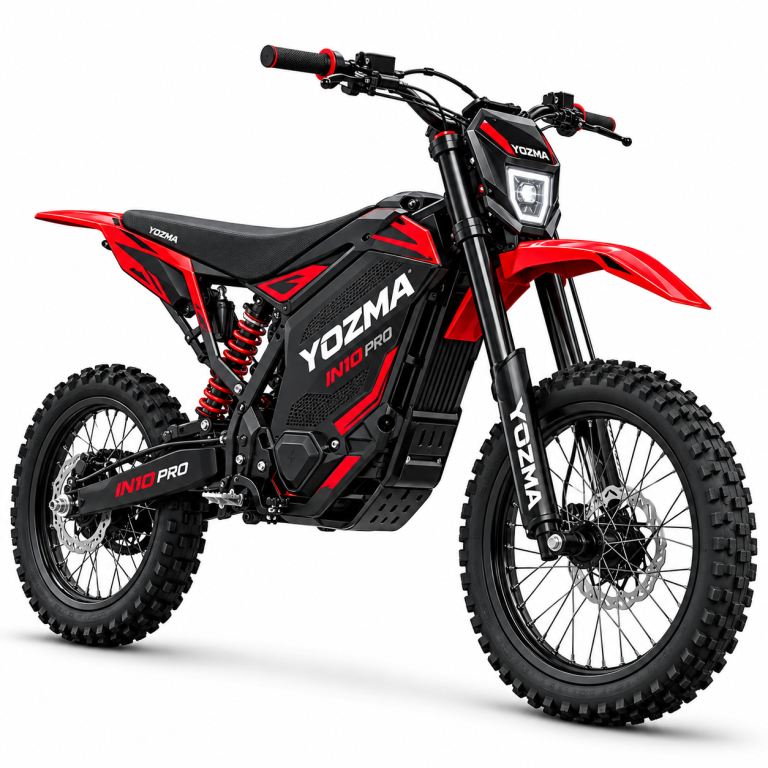
A full-size trail bike for riders who do not want to jump straight to the highest-output models. Its 17″/14″ wheels, suspension and hydraulic brakes suit uneven terrain, and the 60V system delivers far more performance than youth-oriented bikes.
- Motor: 5,500W peak mid-drive
- Battery: 60V 27Ah, 1,620Wh
- Speed: 50 MPH claimed
- Range: up to 60 mi claimed
- Weight: 143 lb
- Max load: 330 lb
- Wheels: 17″ front / 14″ rear
- Brakes: hydraulic disc
Owner feedback: some riders report about 50 MPH and roughly 40 miles under particular conditions. Others raise quality-control and component concerns. These are individual reports, not test results.
- Mid-drive with a full-size wheel setup
- Mid-range power that is easier to manage
- Hydraulic brakes and suspension
- Lowest Wh per lb of the 60V group (11.3)
- Claimed range is not a trail range
- Some quality-control reports
Best for: trail riders who want a balanced full-size bike. Skip if: you want the lightest bike or the highest power.
COSWHEEL R6000
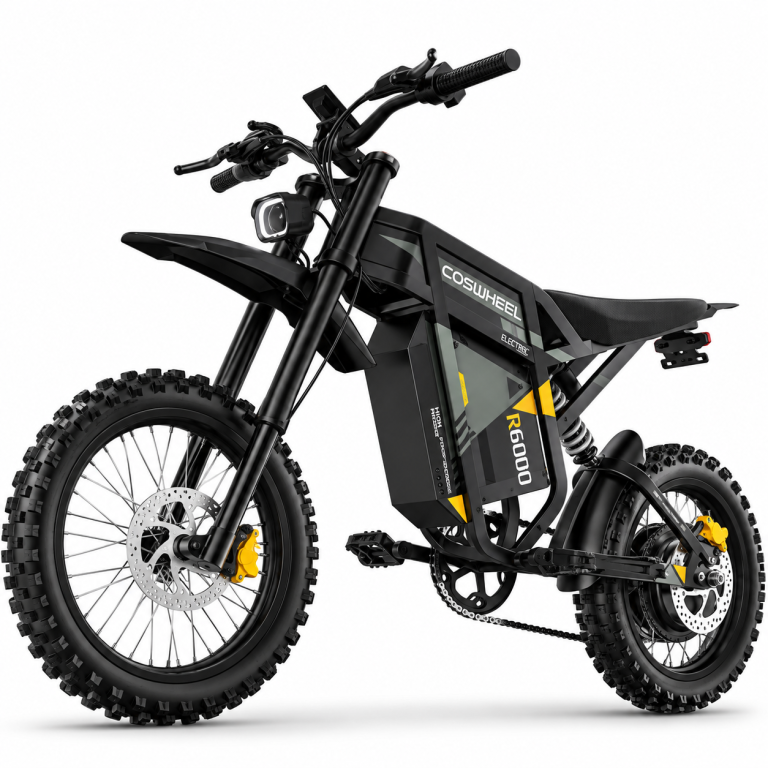
The R6000 pairs a 7,000W peak hub motor with a 1,800Wh battery at a listed weight of about 124 lb, which is lighter than several lower-powered bikes here. That is useful on trails, where battery and weight both matter.
- Motor: 7,000W peak hub
- Battery: 60V 30Ah, 1,800Wh
- Speed: 55 MPH claimed
- Range: up to 80 mi claimed
- Weight: ~124 lb
- Max load: 330 lb
- Wheels: 17″
- Suspension / brakes: full / hydraulic disc
Owner feedback: riders describe strong acceleration and 50+ MPH. Others report much shorter real-world range on demanding off-road rides, plus battery-indicator and component issues.
- High Wh per lb (14.5)
- Large battery and strong power
- Lighter than most 60V bikes here
- 80-mile claim is not realistic for hard riding
- Hub-drive feel differs from mid-drive bikes
- Battery-indicator reports
Best for: riders who want power and capacity. Skip if: you expect 80 miles of hard trail riding.
HAPPYRUN F18 2.0
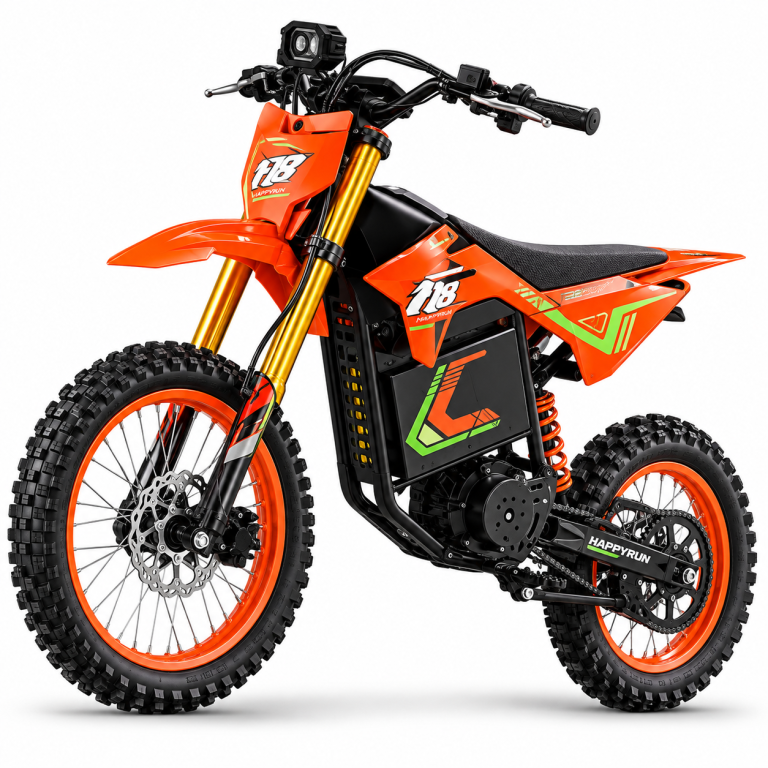
A 6,000W peak mid-drive with a 60V 30Ah battery, full suspension, dual hydraulic discs and reverse assist. The listing gives its 60-mile range for a 165-lb rider at about 20–25 MPH on flat roads, which is more transparent than most.
- Motor: 6,000W peak mid-drive
- Battery: 60V 30Ah, 1,800Wh
- Speed: 46 MPH claimed
- Range: up to 60 mi claimed
- Weight: 125 lb* (listings vary up to 143 lb)
- Max load: 300 lb*
- Wheels: 17″ / 14″
- Features: NFC unlock, reverse assist
Owner feedback: reports of about 46–47 MPH and 30–40 miles. There are also reports of damaged shipments, missing hardware and one serious frame-crack allegation. These are individual experiences, not a measured failure rate.
- Large battery, mid-drive
- Dual hydraulic brakes
- Clear range conditions
- Assembly and quality-control reports
- Lowest top speed in this group
- Weight data conflicts
Best for: recreational trail riders who value features. Skip if: you are not comfortable inspecting the bike after assembly.
Tasaca T500 Pro
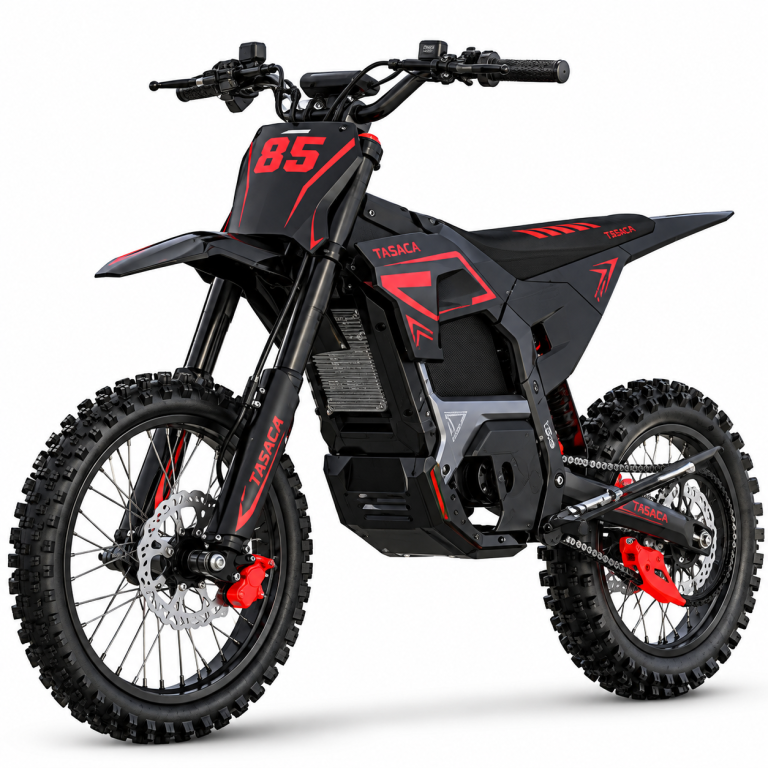
A 6,500W peak mid-drive with a claimed 365 N·m of torque, aimed at riders who expect climbs and uneven ground.
- Motor: 6,500W peak mid-drive
- Battery: 60V 27Ah, 1,620Wh
- Torque: 365 N·m claimed
- Speed: 55 MPH claimed
- Range: up to 55 mi claimed
- Weight: 145.2 lb
- Wheels: 17″ / 14″
- Modes: 5 · dual suspension, hydraulic brakes
Owner feedback: some riders report strong acceleration and hill climbing. Others report much shorter range at full throttle, fluctuating battery readings, startup errors and shipping problems.
- Highest claimed torque here
- Mid-drive with dual suspension
- Five riding modes
- Heavy (145.2 lb) for its battery size
- Inconsistent specs across listings
- Mixed owner reports
Best for: experienced riders on hilly trails. Skip if: you want a light, easy-to-handle bike. Check warranty and load details on the current listing.
Mihayo REX60
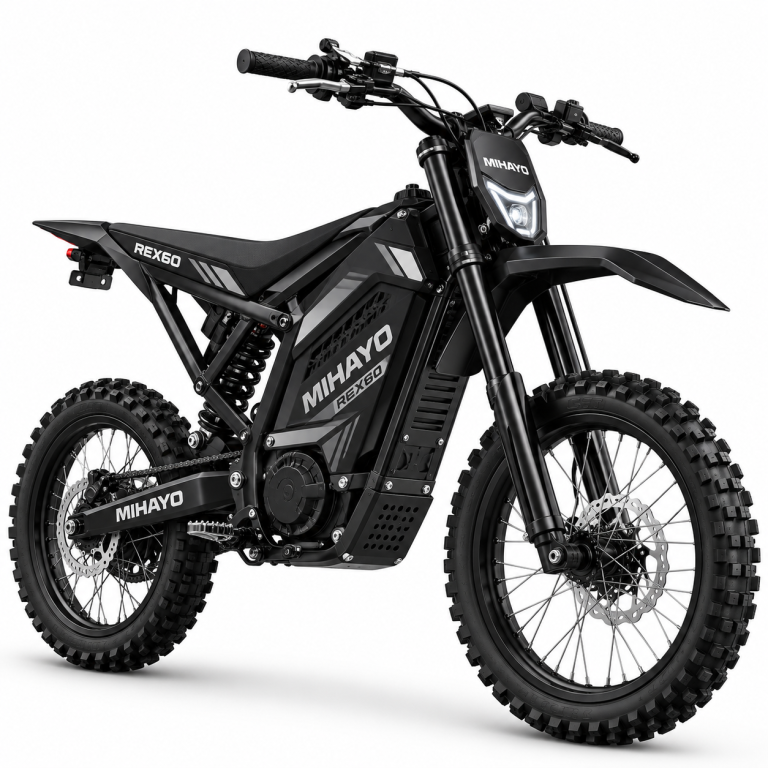
A 5,500W mid-drive with a 60V 30Ah battery and a full-size setup. It suits open unpaved trails, but at 156 lb it is not the easiest bike through tight sections.
- Motor: 5,500W peak mid-drive
- Battery: 60V 30Ah, 1,800Wh
- Speed: 50 MPH claimed
- Range: up to 60 mi claimed
- Weight: 156 lb
- Max load: 286 lb
- Torque: 220 N·m claimed
- Modes: 15 / 28 / 50 MPH
Owner feedback: positive reports on trail performance, comfort and battery life. We also found one serious wiring and fire allegation, which we treat as a single reported incident, not a general failure rate. The review sample is small.
- Large battery, three speed modes
- Mid-drive, full-size wheels
- 156 lb is heavy for tight trails
- Limited long-term reliability data
Best for: adult trail riders on open trails. Skip if: you ride narrow, technical trails.
EKX TX1
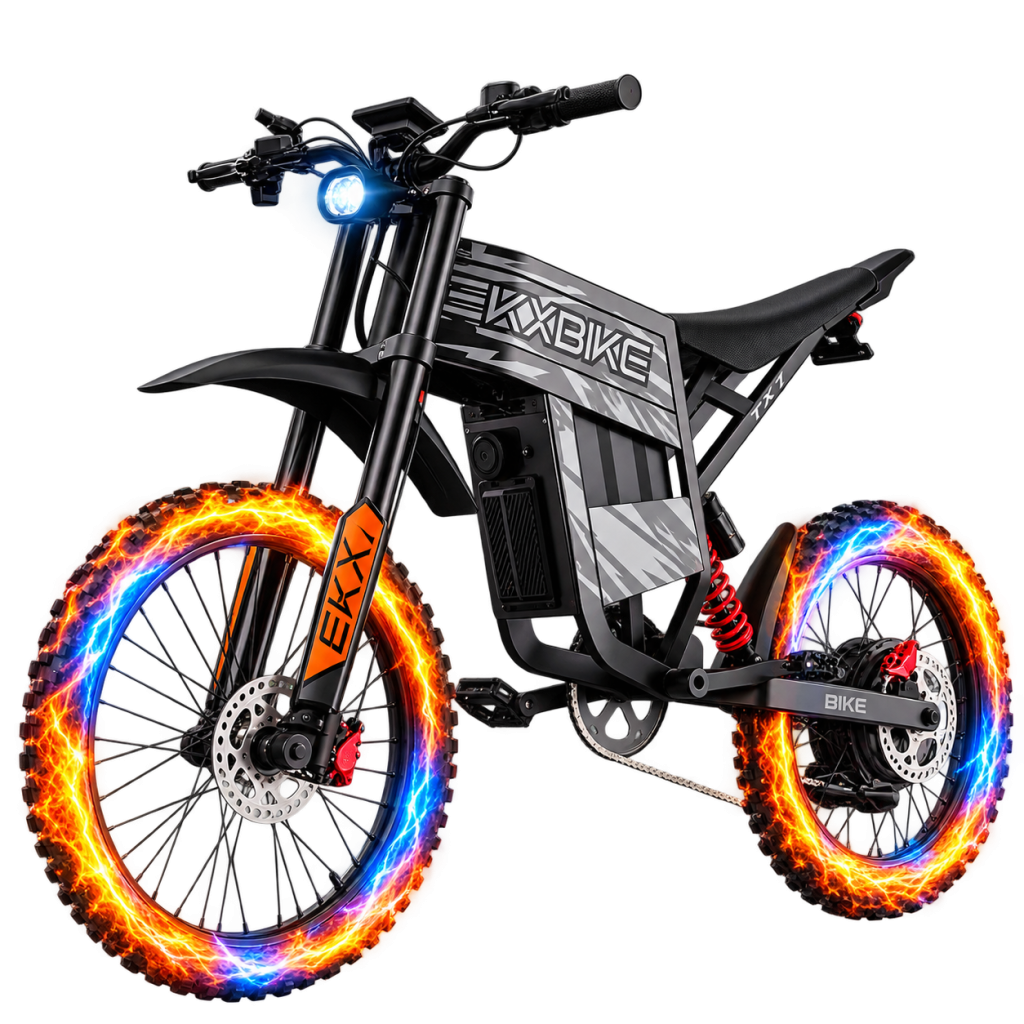
EKX lists the TX1 at 3,000W rated and 7,000W peak. Some marketplace listings say 7,000W or 8,000W, so we use the manufacturer figures. It is not the BENIFORE TX1 reviewed on our site. It has a 19-inch front wheel and lists a 330-lb max load and a 5’2”–6’5” rider range.
- Motor: 3,000W rated / 7,000W peak hub
- Torque: 180 N·m claimed
- Battery: 60V 30Ah, 1,800Wh (removable)
- Speed: 55 MPH claimed
- Range: up to 60 mi claimed
- Weight: 123 lb · Max load: 330 lb
- Tires: 70/100-19 off-road
- Suspension / brakes: inverted fork + rear shock / hydraulic disc
- Charge time: 8–12 hours
Reviewer feedback: independent reviewers cited by the manufacturer report strong hill climbing, including one with a rider over 290 lb. These are individual experiences, not laboratory tests.
- High Wh per lb (14.6)
- 330-lb load and wide rider-height range
- Removable battery
- 8–12 hour charge
- Conflicting power listings
- Powerful for beginners
Best for: larger adult riders on open trails. Skip if: you need quick turnaround between rides or want a beginner bike.
EKX X21 Max
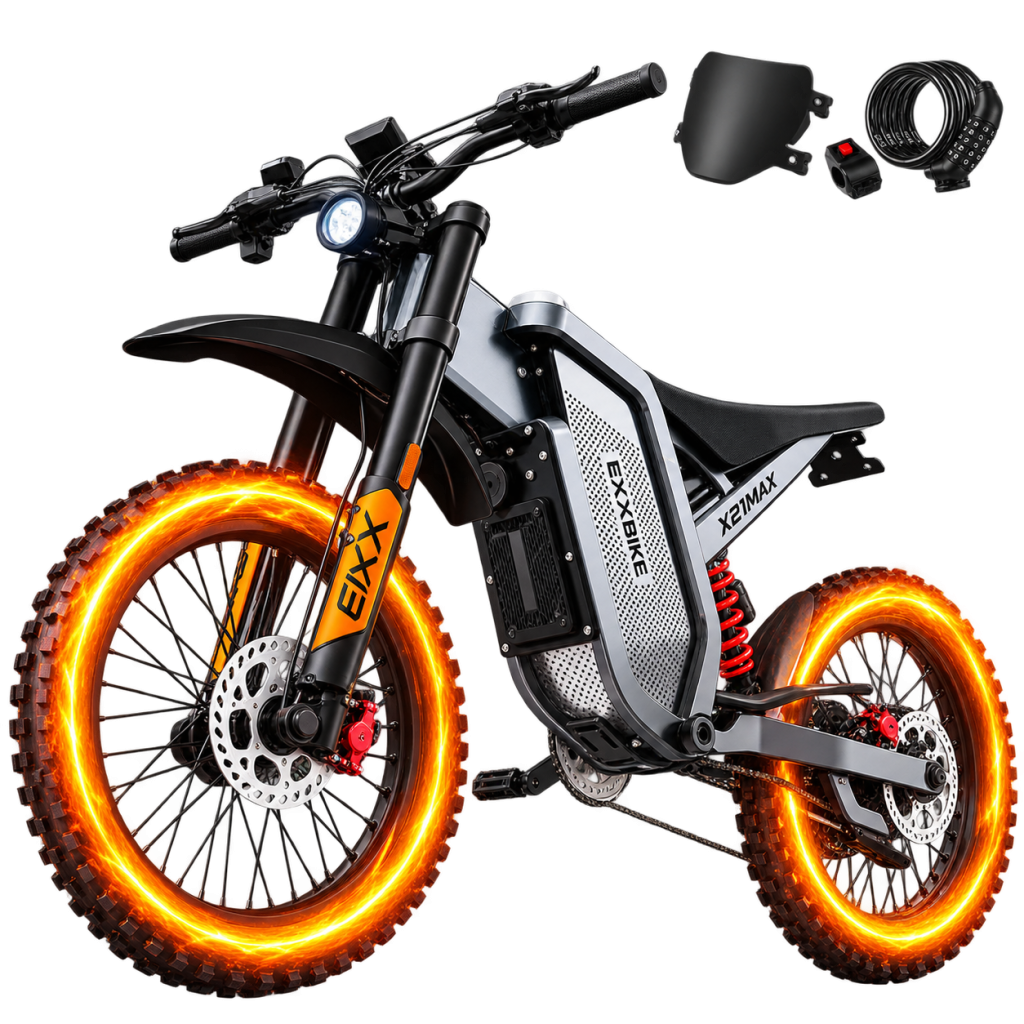
The X21 Max has higher published power and torque than the TX1 with the same 60V 30Ah battery. More power is not an advantage on tight technical terrain unless the rider is comfortable controlling it.
- Motor: 8,000W peak hub
- Torque: 240 N·m claimed
- Battery: 60V 30Ah, 1,800Wh
- Speed: up to 60 MPH claimed*
- Range: 60+ mi claimed*
- Weight: 110–123 lb* (conflicting fields)
- Max load: 330 lb
- Front tire: 19″ · full suspension, hydraulic brakes
- Highest peak power in this guide
- High Wh per lb
- 19″ front wheel for open terrain
- Too much for first-time riders
- Weight and spec fields conflict
Best for: experienced riders who want high performance. Skip if: you are new to electric dirt bikes.
Kovo RT-X
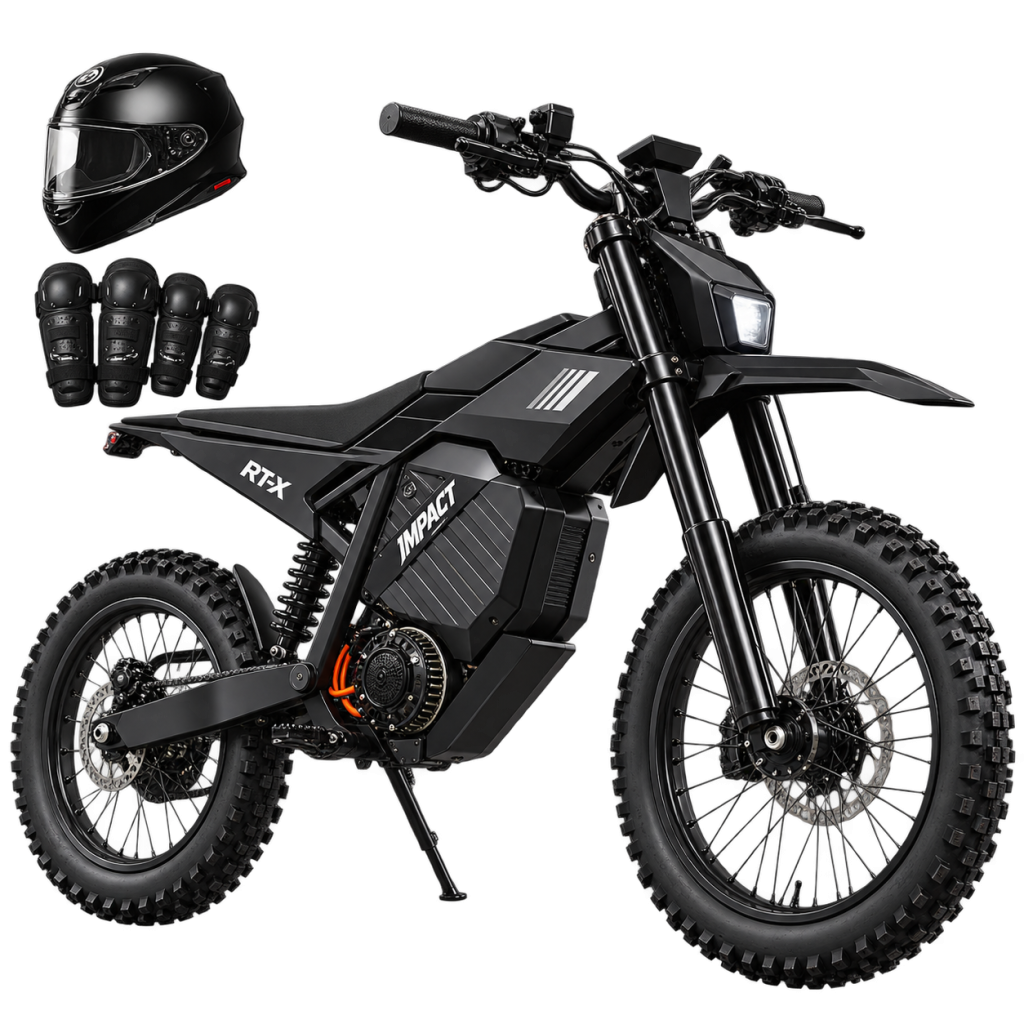
A 72V 30Ah battery (2,160Wh) is the largest here, but at about 186 lb it is also the heaviest. Weight is the main trail trade-off.
- Motor: 6,500W peak mid-drive
- Battery: 72V 30Ah, 2,160Wh
- Speed: 53+ MPH claimed
- Range: up to 70 mi claimed*
- Weight: ~186 lb
- Wheels: 19″ / 17″
- Suspension: dual shocks (listing says hydraulic/nitrogen)
- Largest battery in this guide
- 19″/17″ wheels
- Heaviest bike here (11.6 Wh per lb)
- Hard to maneuver on tight trails
Best for: experienced adults on open trails. Skip if: you ride tight, technical terrain.
How We Compared These Bikes
We did not rank by wattage. Each bike was scored in our notes against trail-relevant specs from listings and manufacturer pages: drive type, battery energy, weight, Wh per lb, suspension, brakes, wheel size, rider fit, and owner feedback. Where a listing does not publish a value, we write “Not listed” and do not estimate it.
- Wh per lb is battery energy divided by listed bike weight. A higher number means more stored energy per pound carried.
- Claimed vs reported: speed, range and torque are claims. Owner reports are individual experiences. Neither is a standardized trail test.
- Scope: this lineup is limited to bikes available on Amazon. Premium electric motorcycles such as the KTM Freeride E-XC are a different category and are not covered here. See our methodology and editorial policy.
Which Bike Fits Your Trails?
| Your trails | Prioritize | Start with |
|---|---|---|
| Smooth dirt, easy recreational trails | Comfort, braking, manageable power | Yozma IN10 Pro, HAPPYRUN F18 2.0, Mihayo REX60 |
| Hills and steep climbs | Torque, power, traction | Tasaca T500 Pro, COSWHEEL R6000, EKX TX1 |
| Rough, technical trails | Suspension, weight, tires, rider control | Lighter bikes: COSWHEEL R6000, EKX TX1 |
| Long rides | Battery Wh and realistic speed | Kovo RT-X, COSWHEEL R6000, EKX bikes |
| Larger riders | Max load, rider height | EKX TX1 (330 lb), EKX X21 Max |
What Matters Most for Trail Riding
Motor power and drive type
Do not compare peak wattage alone. Rated vs peak output, controller and gearing all change real performance. Mid-drive and hub-drive bikes feel different, and each has trade-offs. A 5,000W-class bike gives many adult riders plenty of performance, and 8,000W-plus models suit riders who specifically want high output.
Battery and range
Battery energy is voltage × amp-hours: 60V × 30Ah = 1,800Wh. Real range depends on rider weight, speed, hills, surface, riding mode, temperature, tire pressure and battery age. Treat advertised range as a reference. See our electric dirt bike battery guide for replacement options.
Suspension, tires and brakes
Full suspension matters more on trails than on smooth ground, so look at fork type, rear shock, adjustability and travel when published. Tire size and knobby tread affect grip, and larger wheels roll over obstacles more easily while smaller wheels feel more compact. Hydraulic disc brakes become more valuable as weight, speed and descents increase.
Weight
A heavy bike feels stable on open trails but is harder to turn, lift and recover after a slide. For tight technical trails, weight and maneuverability can matter as much as power.
Where Can You Ride?
Electric Dirt Bike Trail Safety
At minimum, wear a properly fitted helmet, gloves, eye protection, knee and elbow protection, boots and protective clothing. Before every ride, inspect brakes, tires, wheels, throttle, battery, charging connector, suspension, handlebar, drivetrain and fasteners. Use the correct charger and follow the manufacturer’s charging and storage instructions.
High-power bikes are not beginner bikes. Beginners and younger riders should start lower, with adult supervision. See our guides for beginners and teens.
Frequently Asked Questions
What is the best electric dirt bike for trail riding?
No single bike suits every trail rider. The Yozma IN10 Pro is a balanced option, the COSWHEEL R6000 and Tasaca T500 Pro offer more power, and the EKX X21 Max targets experienced riders. The right choice depends on terrain, rider size, experience and ride length.
Is 5,000W enough for trail riding?
For many adult recreational trails, a 5,000W-class bike can be enough. It depends on rider weight, terrain and whether the figure is rated or peak power. 5,000W peak is roughly 6.7 hp.
Which bike is best for hills?
Torque, power and traction matter most. The Tasaca T500 Pro (365 N·m claimed), COSWHEEL R6000 and EKX TX1 are the higher-output options here. Torque figures are manufacturer claims.
Hub-drive or mid-drive for trails?
Each has trade-offs in feel, gearing and maintenance. Compare the complete bike (weight, suspension, controller and battery) instead of choosing on drive type alone.
How much battery do I need for trails?
It depends on ride length and how hard you ride. A 60V 30Ah pack stores about 1,800Wh, and a 72V 30Ah pack about 2,160Wh. Real range varies a lot with speed, hills and rider weight.
Is a heavier bike better for trails?
Not necessarily. Weight adds stability on open trails but makes tight, technical terrain harder.
Are hydraulic brakes necessary for trails?
Not on every bike, but they become more valuable as weight, speed and descents increase.
Can beginners use high-power bikes on trails?
Be careful. Choose a bike with adjustable riding modes, match power to experience, and use protective gear. See our beginner guide.
Final Buying Advice
Start with your trail, not the biggest motor. Easy trails call for manageable power, good brakes and comfortable suspension. Hills reward torque and traction. Rough terrain rewards suspension, tires and fit. Long rides reward battery size. Tight trails reward low weight.
For a balanced starting point, look at the Yozma IN10 Pro. For more power and battery at a lower weight, look at the COSWHEEL R6000. For hills, the Tasaca T500 Pro. For larger riders, the EKX TX1. Before ordering, check current specifications, rider capacity, battery, suspension, brakes and warranty on the live listing.